
Why Shipboard Cabling Still Causes Class Findings
Shipboard cabling is still one of the most underestimated scopes in marine electrical work. This article explains why class findings continue to appear and how engineering-driven execution prevents them.
Shipboard cabling is still underestimated because the visible result often looks simple. In practice, the quality of routing, segregation, fixing, penetration handling, and documentation determines whether the installation remains reliable after delivery and whether it stands up to survey scrutiny.
Engineering Perspective
Cabling Fails Long Before The Failure Becomes Visible
The most common cabling problems are not dramatic on day one. They are built quietly into the installation through route decisions made without engineering logic, support systems that ignore vibration exposure, and penetrations treated as secondary details rather than controlled fire-safety interfaces.
That is why many cabling-related findings do not appear during installation. They appear months later during survey, troubleshooting, or prolonged shipboard operation.
Routing Is An Engineering Decision, Not A Space Decision
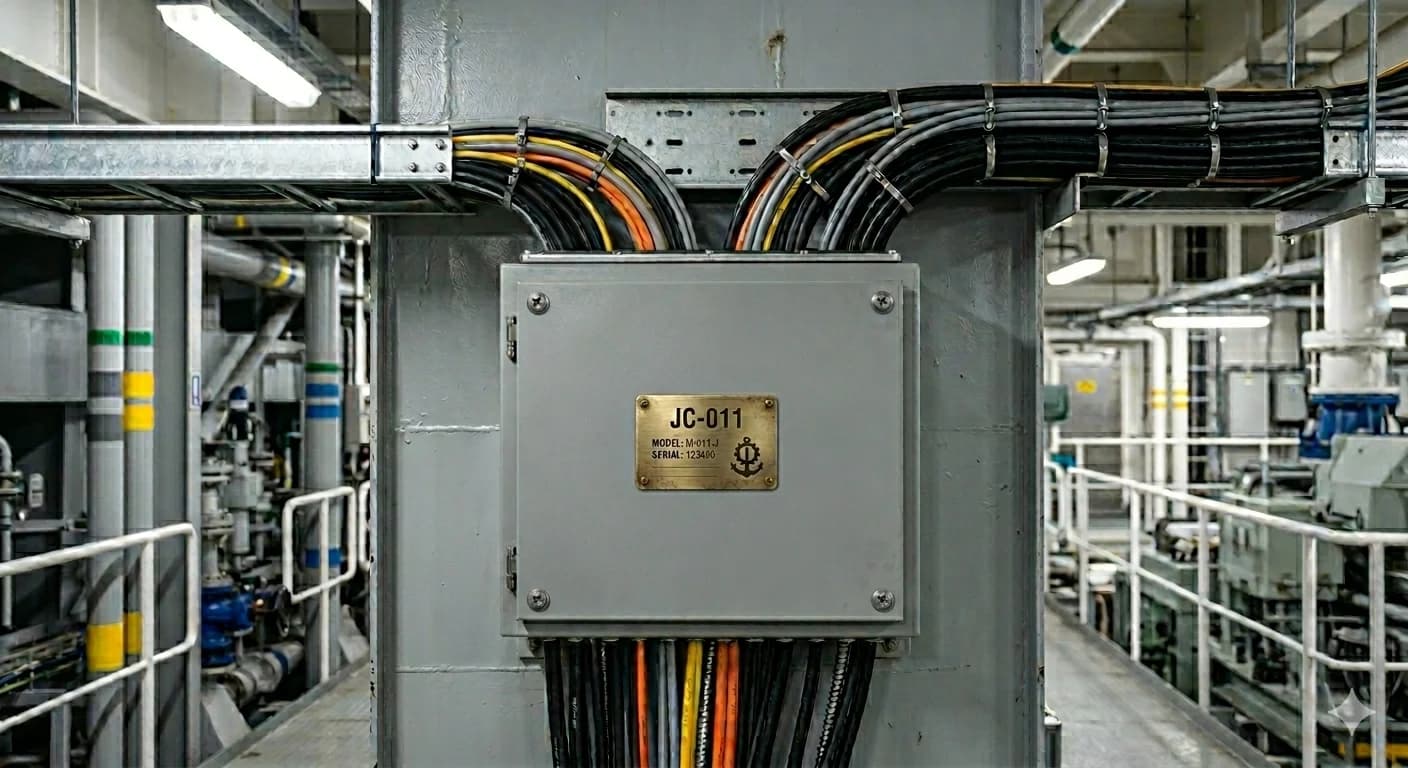
One of the main causes of future findings is route selection based only on available physical space. On ships, cable routes must be evaluated against fire zoning, accessibility, vibration, thermal exposure, and separation between power, control, and signal circuits.
When route logic is undocumented, even technically acceptable work becomes difficult to defend. From a survey perspective, undocumented choices are uncontrolled choices.
Key Technical Insight
Class findings related to cabling are rarely caused by the cable itself. They are almost always caused by the way the cable was routed, fixed, segregated, penetrated, and documented.
Mechanical Stress Is Usually The Hidden Failure Mechanism
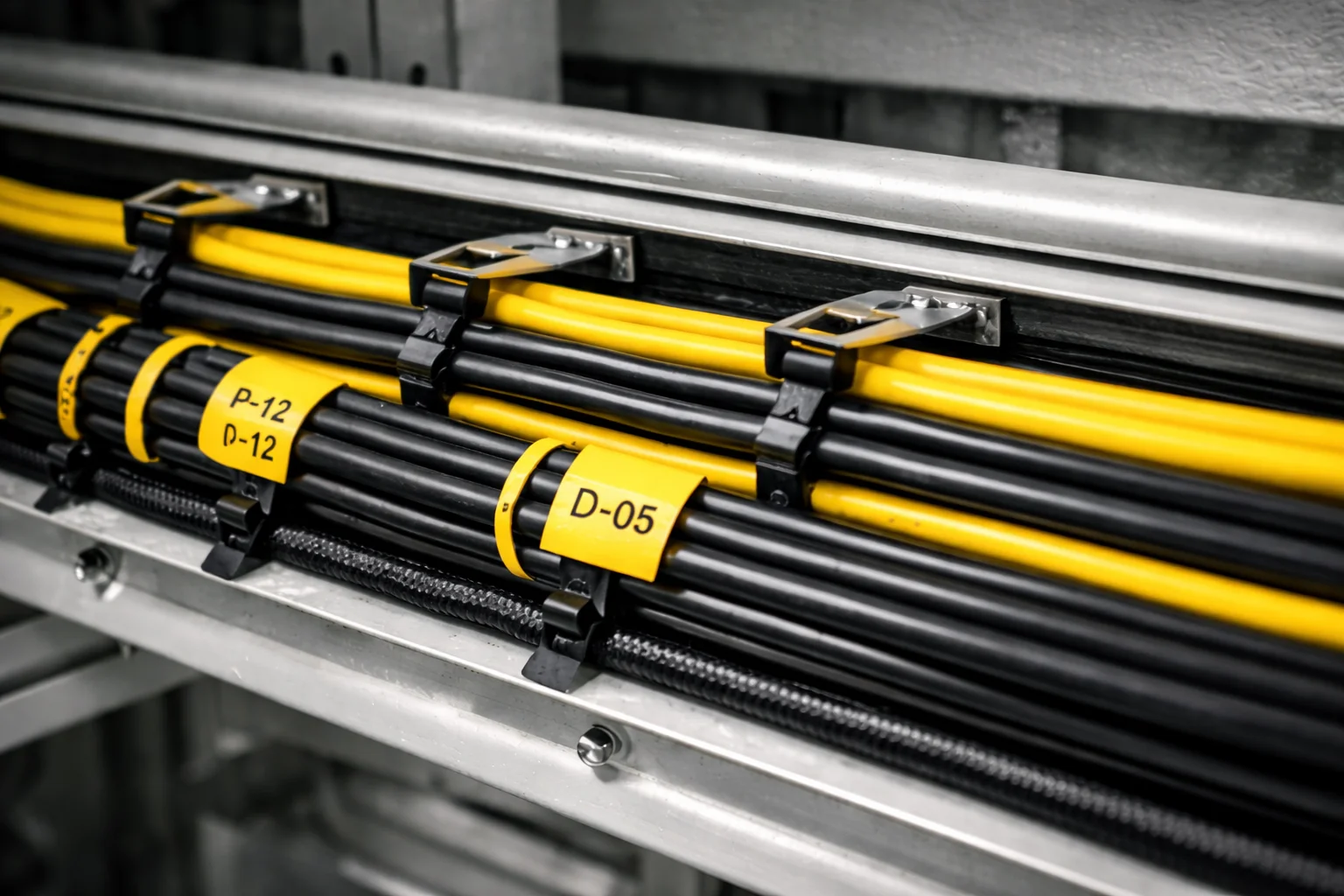
Shipboard cables operate under continuous vibration, restricted support conditions, mechanical movement, and thermal cycling. If support spacing is inconsistent or fixing methods are unsuitable, insulation and terminations begin to degrade long before anyone notices an issue.
This is why support philosophy is not a cosmetic matter. It is part of long-term electrical reliability.
Penetrations, Labeling, And Handover Are Operational Topics
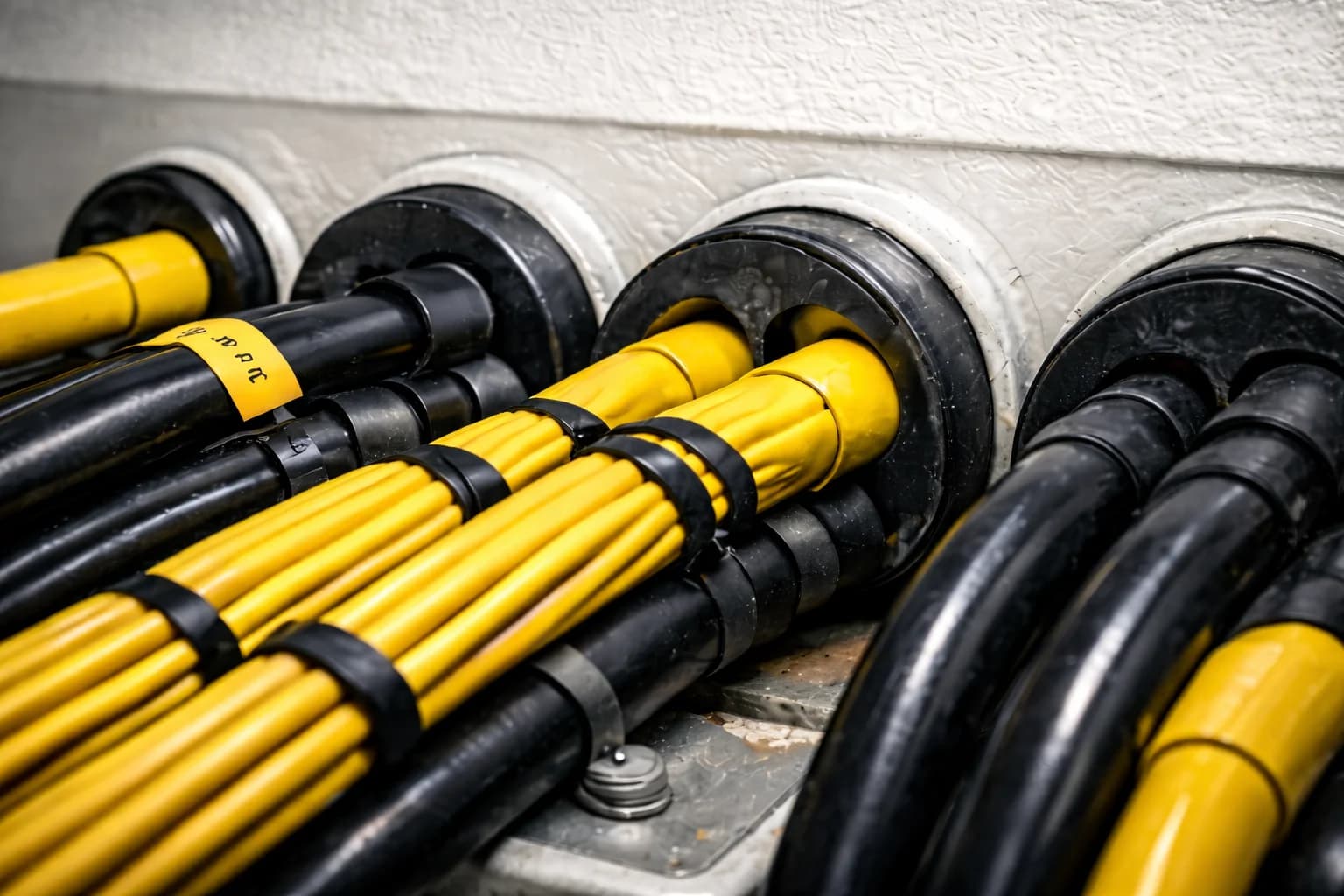
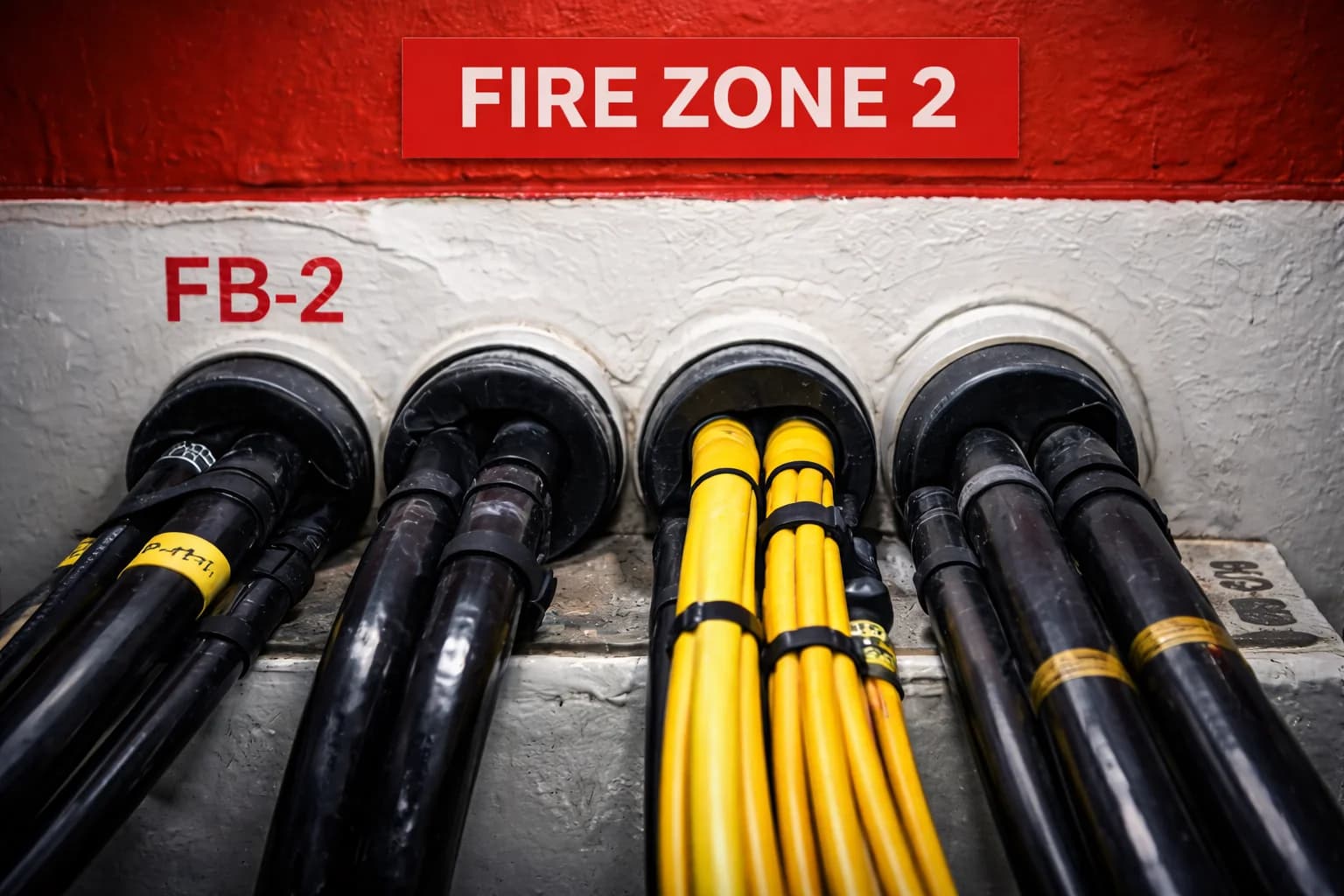
Penetrations across fire boundaries are one of the most frequently underestimated parts of a cabling project. When unmanaged or undocumented, they quickly become a source of class non-conformity.
The same applies to labeling and identification. These are not administrative extras. They directly affect maintenance speed, fault finding, and emergency response quality.