Marine Power & Electrical Systems
Marine Cabling
Engineering-driven, class-aware marine cabling for low-voltage (≤1 kV) shipboard power, control, signal, and data circuits. We execute multi-kilometer cable pulling projects with SOLAS and IEC 60092 compliance.
Overview
VI MARINE delivers shipboard low-voltage (≤1 kV) marine cabling as an engineering discipline. Our cabling works follow SOLAS Chapter II-1, IEC 60092 Series, and classification society rules. We execute multi-kilometer cable pulling projects, retrofit cabling during shipyard periods, and survey-ready installations for engine rooms, cargo areas, accommodation spaces, and hazardous zones.
Why Marine Cabling Requires Engineering
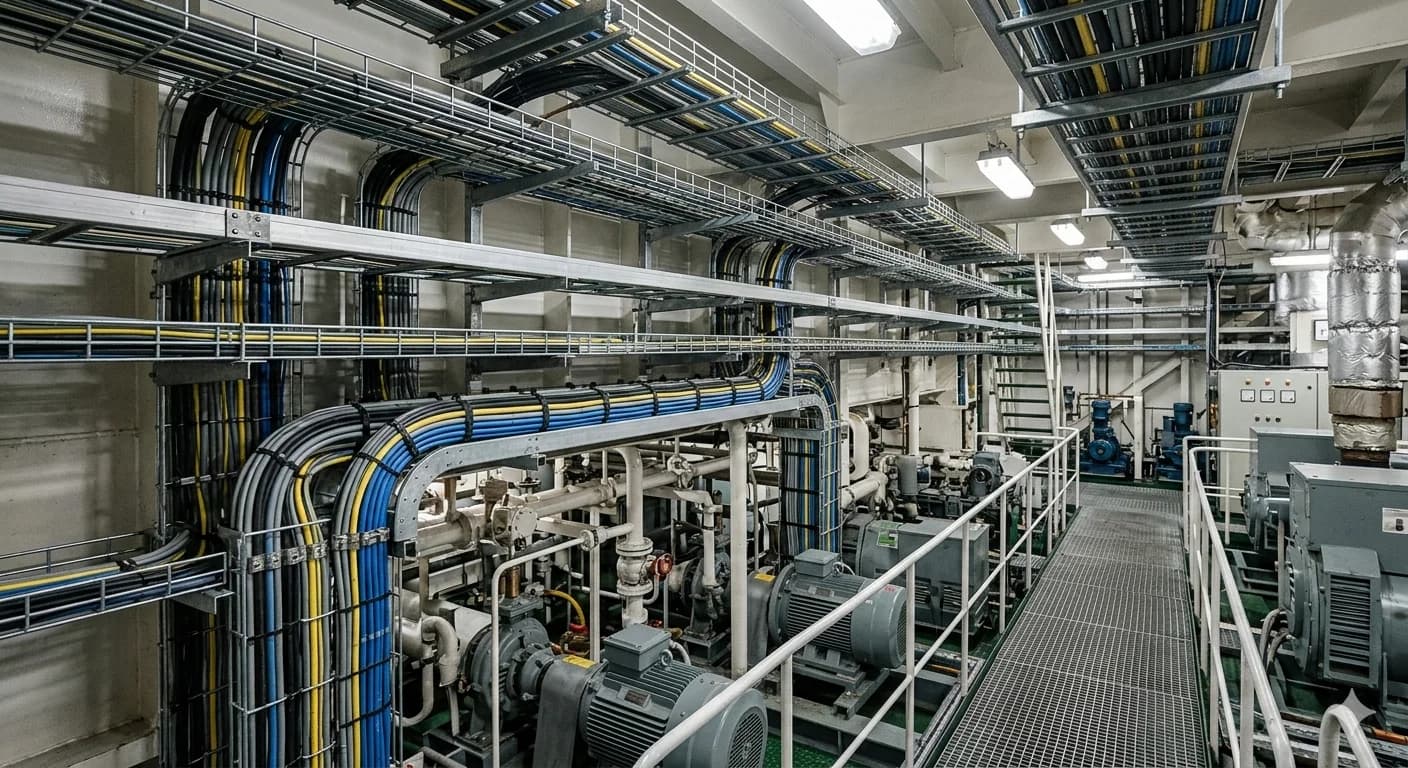
Shipboard cabling systems operate under vibration, heat, mechanical stress, fire-risk zoning, and continuous operation. Unlike shore-based installations, improper cable routing or fixing on board ships can directly affect system reliability, fire safety, and survey outcomes.
Generic cabling practices are not sufficient in a marine environment. The difference between passing and failing a survey is often how the cable was installed, not what was installed.

What We Do
How We Execute Marine Cabling
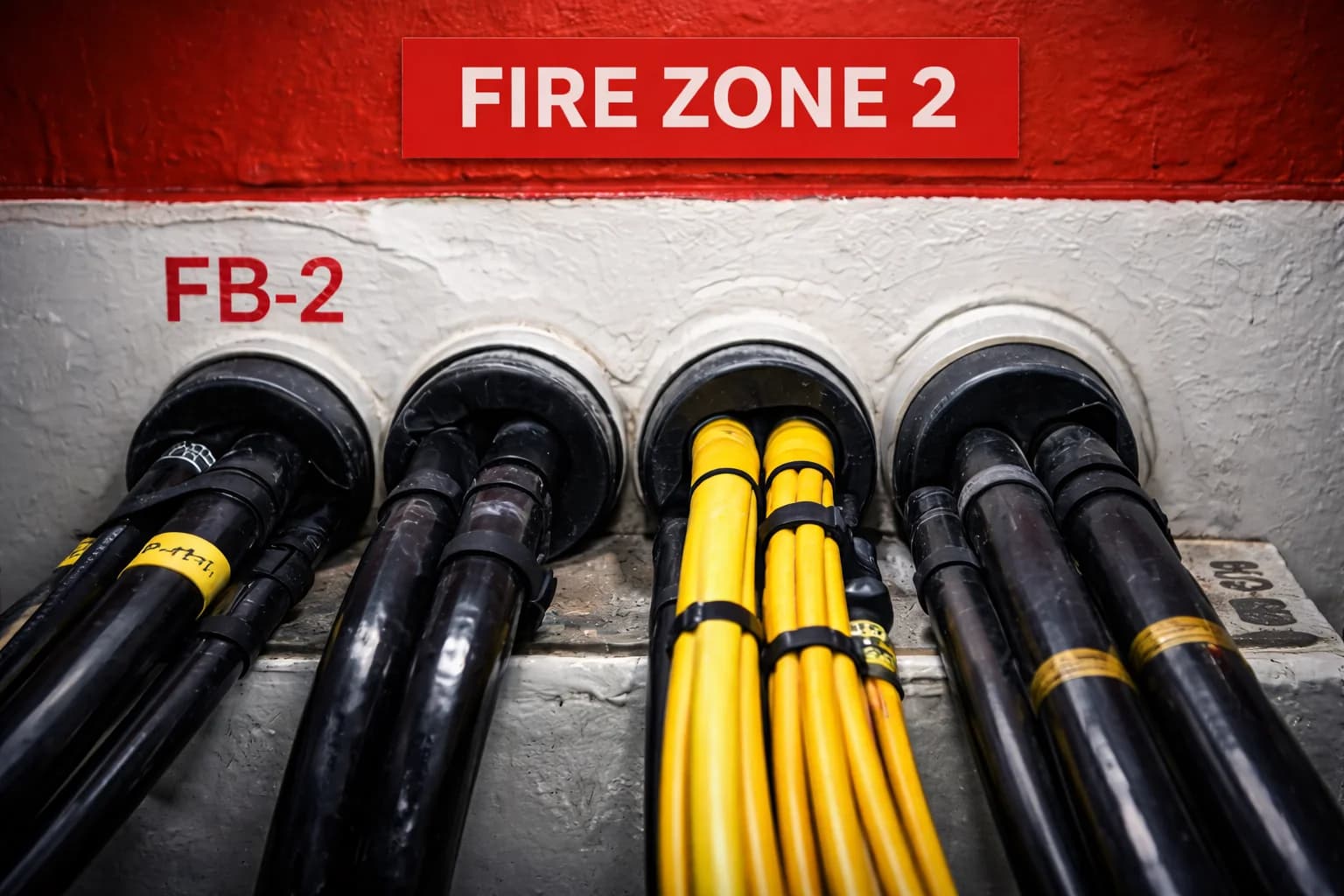
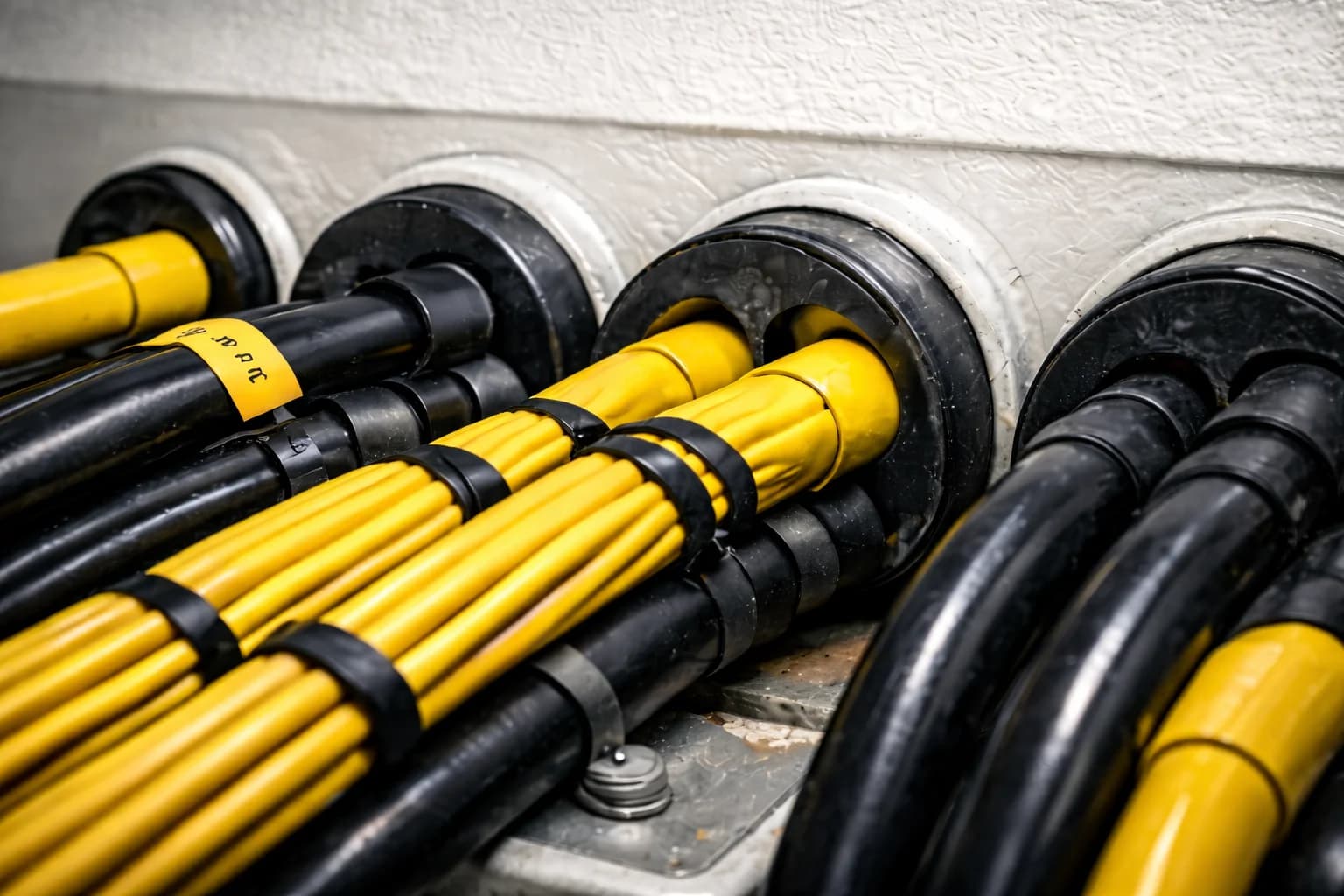
Our cabling works follow a structured engineering and execution discipline. Route planning and cable segregation philosophy come first, followed by controlled cable pulling methodology that protects insulation integrity. Proper tray design, support spacing, and fixing systems are installed. Fire boundary penetrations are managed according to class rules. Cable identification, tagging, and schedule control are maintained throughout.
Deliverables & Documentation
Typical deliverables at completion of cabling works include cable lists and routing overview, identification and connection records, test results (IR, continuity, functional where applicable), installation photo records, and as-built documentation. Execution is monitored through defined quality control points.